Home › Guides › Steam cleaning vs pressure washing: which is better for stone?
Steam cleaning vs pressure washing: which is better for stone?
Short answer: For natural stone, brick and heritage masonry, low-pressure steam is generally the safer choice. It cleans with heat rather than force, kills algae and spores, and leaves the surface and joints intact. It will not remove rust or metal stains on its own. Pressure washing is faster on hard, tough surfaces but can strip soft stone and blast out joints.
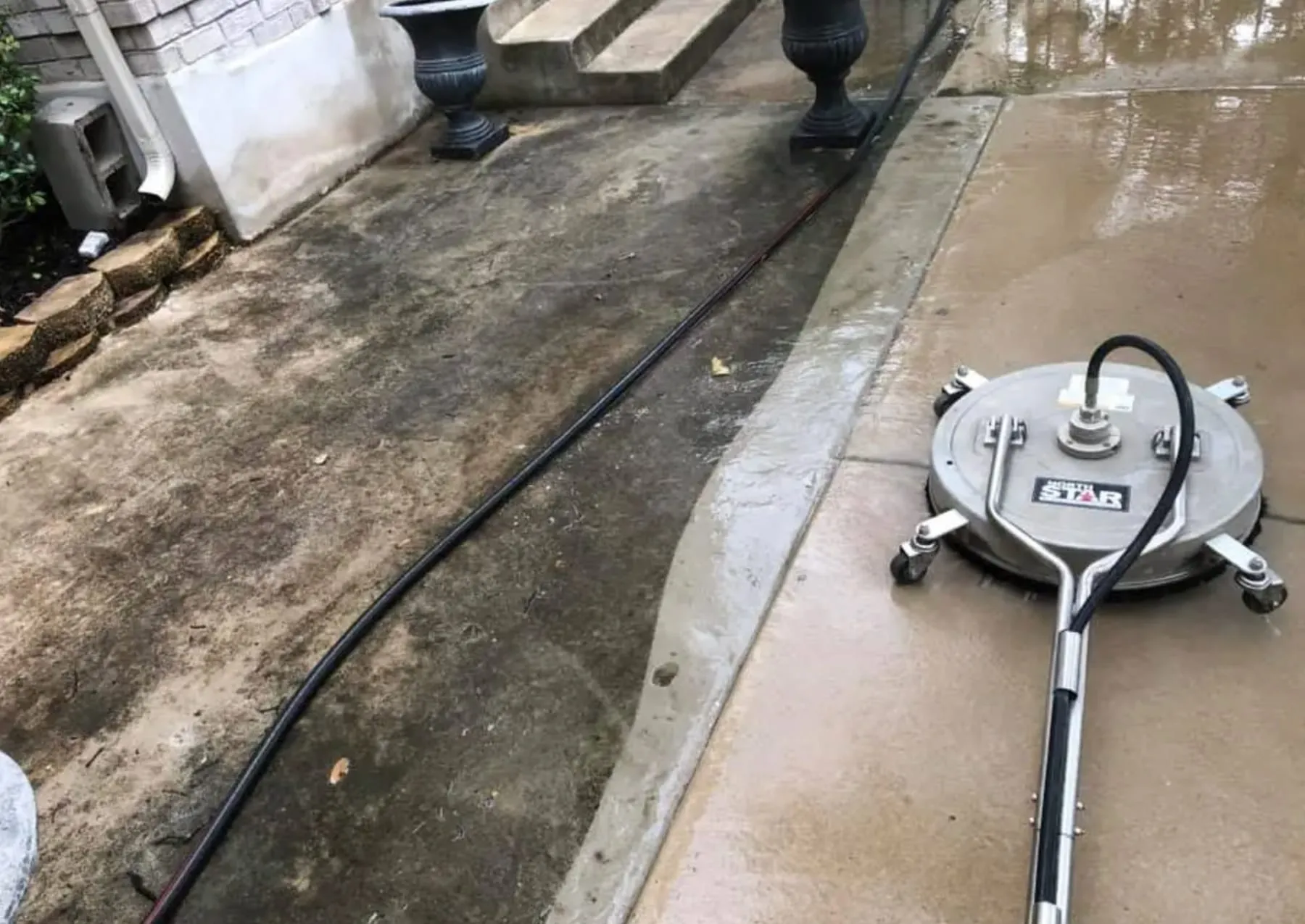
How to choose between steam and pressure washing
- Identify the surface. Soft natural stone, old brick and heritage masonry favour gentle methods. Hard, modern, hard-wearing surfaces tolerate more.
- Check the joints. Worn or sandy joints are easily washed out, so favour a method that does not blast them.
- Consider the growth. If algae, lichen or black spot is the problem, heat helps kill algae and spores, while low pressure avoids the damage force can do. Steam will not remove rust or metal stains on its own.
- Think about frequency. A method that leaves the surface intact usually keeps stone cleaner for longer, so it needs cleaning less often.
- Consider the environment. Steam cleans with water and heat, with no need for harsh chemicals.
Side-by-side comparison
| Low-pressure steam | Pressure washing | |
|---|---|---|
| How it cleans | High heat at low pressure | Force of a high-pressure jet |
| Surface of natural stone | Surface left intact | Can strip the surface and leave it pitted |
| Joints and pointing | Sound joints stay in place | Can blast out sand and mortar |
| Algae and spores | Heat kills them, including below the surface | Removes surface growth, spores can remain |
| Chemicals | Water and heat only | Often paired with chemical treatments |
| Suited to | Natural stone, brick, heritage masonry, resin drives | Tougher, harder, modern surfaces |
| How soon it re-greens | Intact surface stays cleaner for longer | Roughened surface can hold dirt and growth sooner |
Our approach
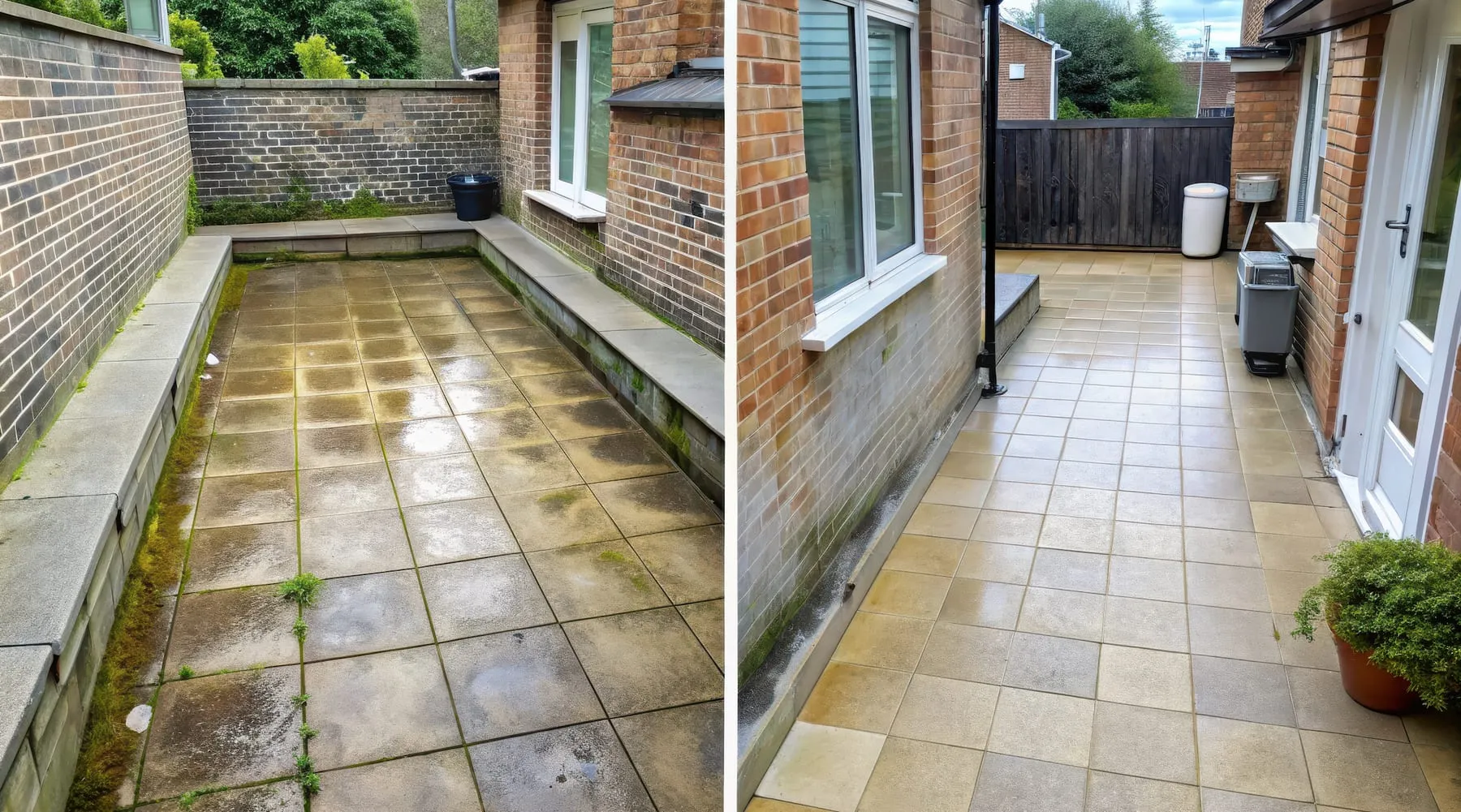
We use low-pressure steam, with no pressure washing or jet washing, on patios, paving, brick, heritage stone and resin drives. Read why in our explanation of why you should only clean stone with steam.
Frequently asked questions
Is steam cleaning better than pressure washing?
For natural stone, brick and heritage masonry, usually yes, because it cleans with heat rather than force and leaves the surface and joints intact.
Does steam cleaning kill algae?
Heat kills algae and spores, which is one reason we use steam. It will not remove rust or other metal stains on its own.
Is steam cleaning environmentally friendly?
It uses water and heat, so it avoids the need for harsh chemicals that can harm the stone and the surroundings.
Is steam as effective as a jet wash on tough dirt?
On natural stone it is effective on dirt, algae, spores, black spot and grease, without the damage a jet wash can cause.
Sources and further reading
Related guides
- Does pressure washing damage patios and natural stone?
- How does steam cleaning work on stone, patios and brick?
- What are the "fines" on stone, and why do they matter?
General guidance only. Always test on a hidden area first and follow product instructions. Last updated 25 November 2026.
Request a quote
Tell us about the patio, wall, drive or floor and we will arrange a meeting. Or call 07907 716 893.