Home › Guides › How do I clean my patio?
How do I clean my patio?
Short answer: Sweep the patio, remove weeds and moss, scrub with a stiff (not wire) brush and plenty of water and rinse at low pressure, using a patio cleaner suitable for your stone only for stubborn algae and exactly as the label says. Avoid close-range pressure washing and acid cleaners on natural stone, because they can strip the surface and wash out the joints.
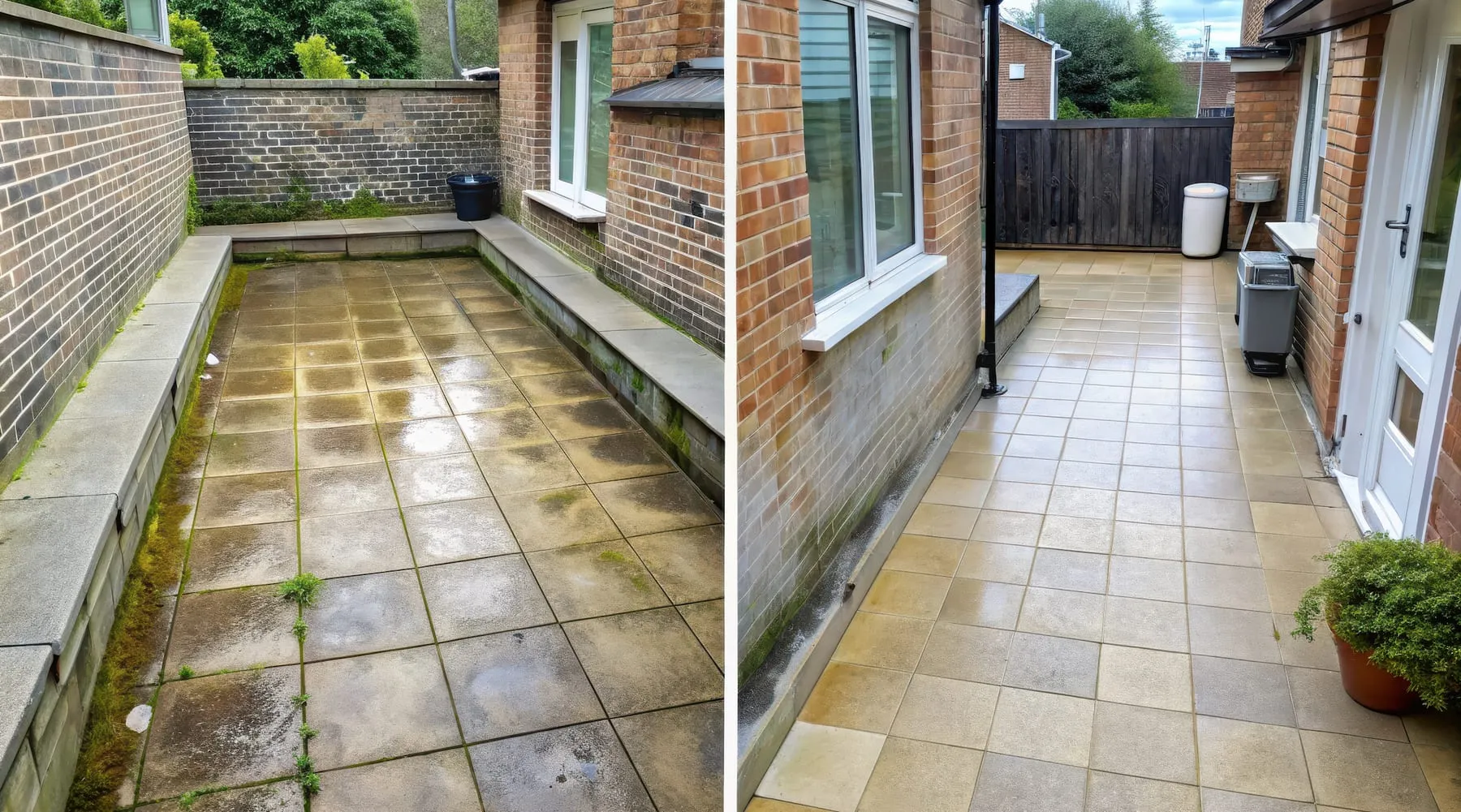
How to clean a patio, step by step
- Identify your paving. Check whether it is sandstone, limestone, porcelain, concrete or block paving. Natural stone such as sandstone and limestone is softer and easier to damage. Always test any product or method on a small hidden area first.
- Clear the surface. Move furniture and pots. Sweep off loose dirt, pull out weeds and scrape moss from the joints with a plastic scraper or an old knife.
- Treat stubborn growth if needed. Brushing and water is often enough, and the Royal Horticultural Society notes that non-chemical methods are effective. For stubborn algae, use a patio cleaner labelled for your stone on a dry day and follow the label. Protect plants, and keep run-off out of surface water drains, ponds and watercourses. Bleach and acid cleaners are best avoided on natural stone.
- Leave it to work. Give any product the time stated on the label. Treatments can take days to work, so the patio may look cleaner over the following days rather than instantly.
- Scrub and rinse. Scrub with a stiff brush, never a wire brush, then rinse with a hose or a pressure washer on a low setting held well back from the stone. Repeat on stubborn patches rather than blasting them.
- Let it dry, then check the joints. Once dry, look for loose or missing pointing. Top up or repoint worn joints, and only then consider a sealer. Sealing can reduce staining and ease cleaning, but it does not stop algae where damp and shade remain, and some manufacturers do not recommend it, so check your paving supplier's advice.
What not to do
- Do not use a pressure washer close up on sandstone or limestone. It can strip the surface, leave a rough pitted finish and blow out the sand or mortar from the joints.
- Do not use acid cleaners, including vinegar, on limestone or other lime-based stone. They can etch the surface.
- Do not use wire brushes or stiff scrapers on the face of the stone.
- Do not wash strong chemicals into planting beds or drains.
Why steam is a gentler alternative
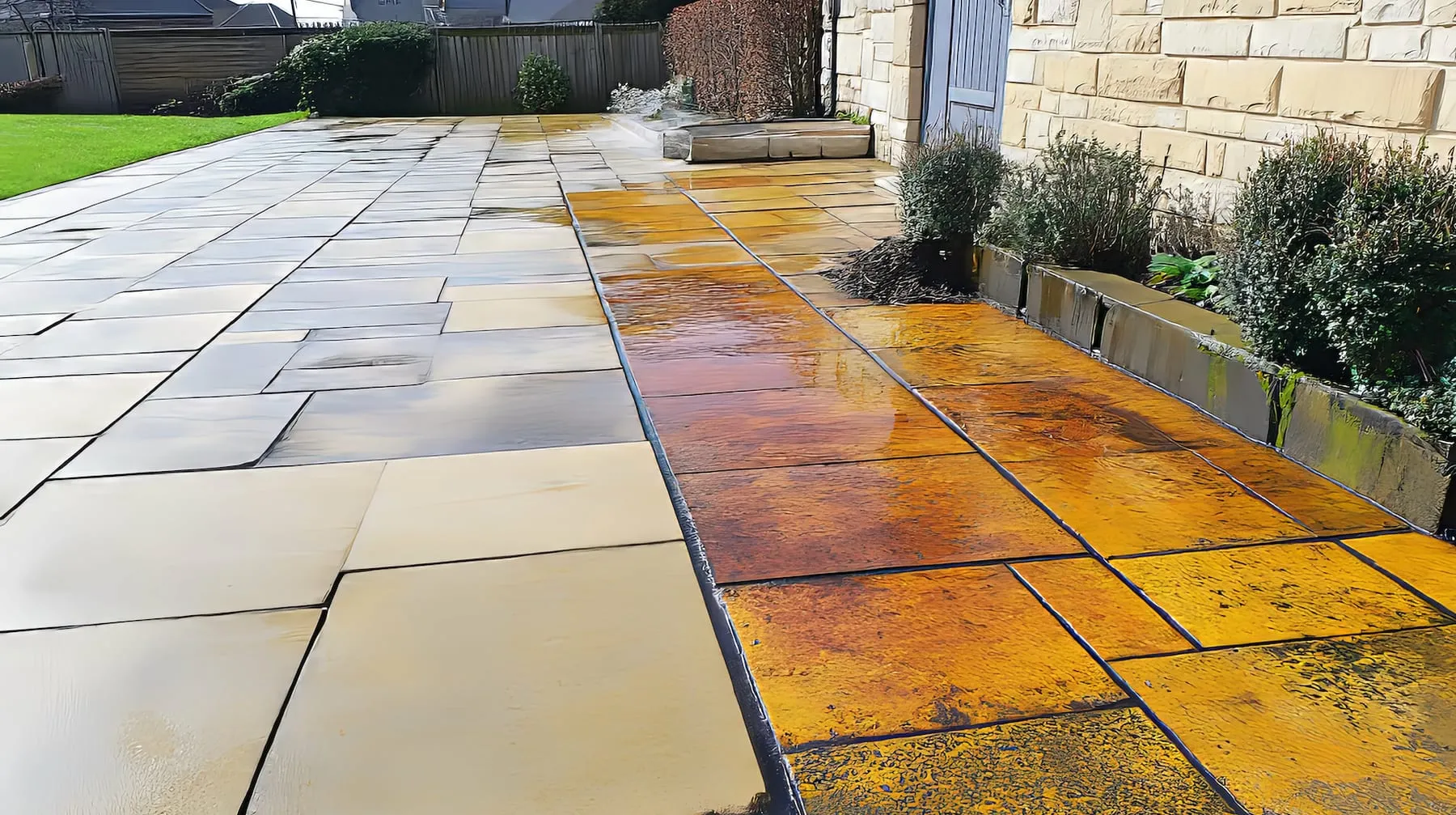
Low-pressure steam cleans with heat rather than force. It kills algae and spores and lifts dirt without stripping the face of the stone. It is the method we use on patios, with no jet washing. You can read more in our guide to steam versus pressure washing.
When to call a professional
- The patio is natural stone and you are unsure what it is.
- Black spot, deep staining or heavy moss has not shifted with brushing or a suitable cleaner.
- The joints are failing and need repointing as well as cleaning.
- The area is large, steep or slippery.
Frequently asked questions
What is the best way to clean a patio without a pressure washer?
Sweep, remove weeds, scrub with a stiff brush and water, use a patio cleaner that suits your stone for stubborn algae, and rinse with a hose. For tougher dirt, professional low-pressure steam cleaning avoids the damage a jet wash can cause.
Does pressure washing damage patios?
It can. On sandstone and limestone it can strip the surface and expose a rougher face that holds dirt, and it can remove the sand or mortar from between the slabs.
How often should I clean my patio?
Most patios benefit from a clean and an algae treatment once a year. Shaded, damp patios may need more often.
Can I use bleach on my patio?
Bleach is not recommended on natural stone and can harm plants and run-off. A biocide cleaner made for patios is a better choice, used as the label directs.
Sources and further reading
- Marshalls: Patio & Driveway Aftercare Guide (2022)
- Marshalls: Cleaning & Maintenance Guidelines for garden paving and driveways
- Royal Horticultural Society: algae, lichens, liverworts and moss on hard surfaces
- Bradstone: how to clean your patio
Related guides
- Should I clean my patio myself or hire a professional?
- How much does professional patio cleaning cost?
- How do I remove black spots from my patio?
- Should I clean, repoint or seal my patio first?
General guidance only. Always test on a hidden area first and follow product instructions. Last updated 25 November 2026.
Request a quote
Tell us about the patio, wall, drive or floor and we will arrange a meeting. Or call 07907 716 893.